Ativan (Lorazepam): Complete Patient Guide
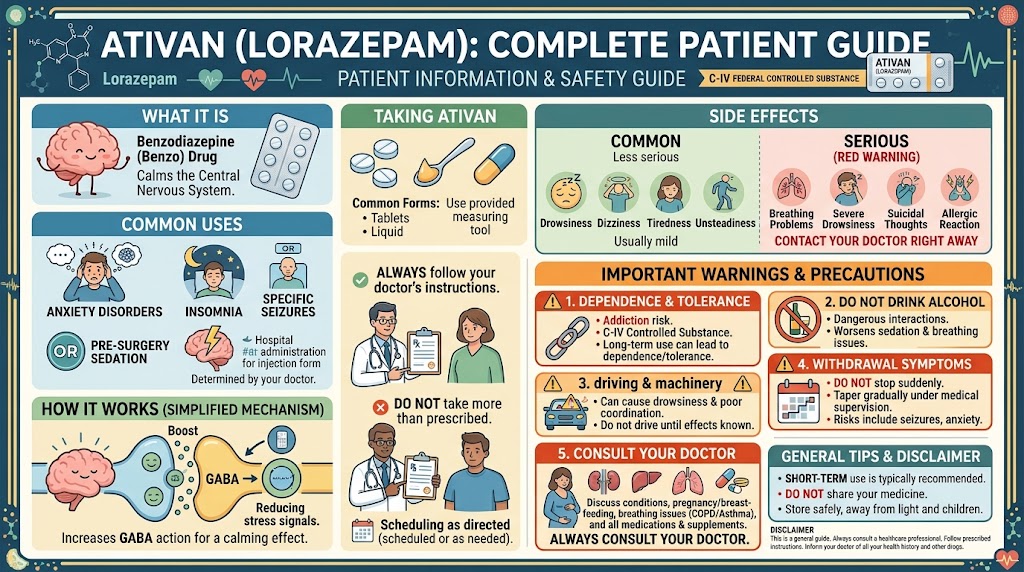
Quick Answer Box : Ativan (Lorazepam) is a prescription benzodiazepine medication primarily used to treat anxiety disorders, provide short-term anxiety relief, and induce sedation before surgery. It works rapidly by enhancing GABA, a calming chemical in the brain. Due to risks of dependence and severe withdrawal, it is strictly for short-term, medically supervised use.
Best Way to Buy Ativan Online
| Website | 5-Star Reviews | Shipping Speed | Action |
| Get Pil | 1,780 Reviews | 2-5 Days | Click Here to Buy |
| Global Cure | 400 Reviews | 1-2 Days | Click Here to Buy |
| Global Pharma | 760 Reviews | 3-7 Days | Click Here to Buy |
| Global Trust | 650 Reviews | 2 Days | Click Here to Buy |
| Health Rx | 535 Reviews | 2-3 Days | Click Here to Buy |
Anxiety and severe psychological distress can be debilitating, affecting every aspect of a person’s life. When these symptoms become unmanageable through therapy or over-the-counter methods, healthcare providers often turn to potent pharmacological interventions. Ativan, known generically as Lorazepam, is one of the most widely prescribed and recognized medications in this category.
Understanding how Ativan works, how it should be taken, and the serious risks associated with its use is critical. This comprehensive guide provides evidence-based information to help patients and caregivers navigate their treatment safely.
What Is Ativan?
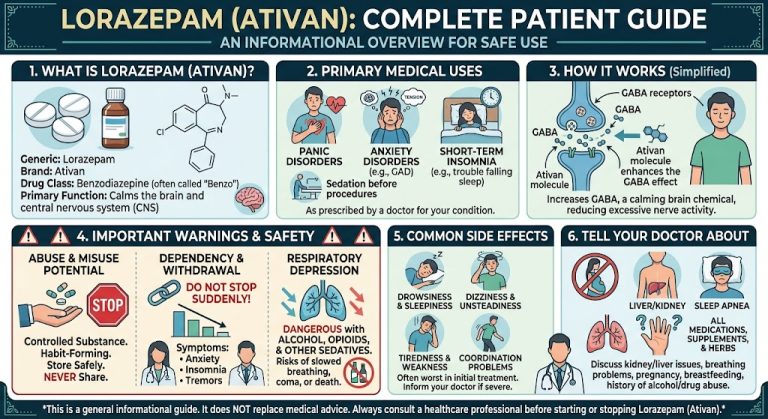
Ativan is the brand name for Lorazepam, a prescription medication belonging to a class of drugs called benzodiazepines. It acts as a central nervous system (CNS) depressant. Because it has a recognized medical use but also a significant potential for abuse, physical dependence, and psychological addiction, the U.S. Drug Enforcement Administration (DEA) classifies it as a Schedule IV controlled substance.
Ativan is available in several forms, including oral tablets, an oral concentrate solution, and an injectable solution (typically administered in hospital settings). It is renowned for its intermediate onset and half-life, making it highly effective for specific medical situations.
How Ativan Works
To understand Ativan, you must understand how the brain regulates excitement and stress. The human brain contains a vast network of chemical messengers called neurotransmitters. One of the most important inhibitory neurotransmitters is gamma-aminobutyric acid (GABA).
GABA’s primary function is to act as the brain’s “brakes.” When you experience stress, your brain’s electrical activity spikes. GABA slows this electrical activity down, promoting a sense of calm.
Ativan works by binding to specific receptor sites on the GABA network. It does not create more GABA; instead, it enhances the effects of the GABA already present in your brain. By amplifying this natural braking system, Ativan rapidly depresses the central nervous system, reducing anxiety, relaxing muscles, and inducing sleepiness.
FDA-Approved Uses of Ativan
The FDA has specifically approved Ativan for a select number of medical indications. While doctors sometimes prescribe it “off-label” for other conditions (like chemotherapy-induced nausea), its primary approved uses include:
Anxiety Disorders
Ativan is indicated for the management of anxiety disorders. This typically involves Generalized Anxiety Disorder (GAD), where a patient experiences excessive, uncontrollable worry that disrupts daily life. It is generally used as a short-term bridge while longer-acting medications (like SSRI antidepressants) take effect.
Short-Term Anxiety Relief
It is highly effective for the short-term relief of the symptoms of anxiety or anxiety associated with depressive symptoms. It is often prescribed for acute situational anxiety—such as a severe panic attack, a traumatic event, or extreme phobic responses (e.g., fear of flying).
Pre-Surgical Sedation
The injectable form of Ativan is widely used in hospital and clinical settings to produce sedation, relieve anxiety, and decrease the patient’s ability to recall events related to a surgical or medical procedure (anterograde amnesia).
Potential Benefits
When used strictly as directed under medical supervision, the clinical benefits of Ativan are substantial:
- Rapid Relief: Oral Ativan typically begins to work within 30 to 60 minutes, providing fast relief during acute distress.
- Predictable Duration: With an intermediate half-life (roughly 10-20 hours), it doesn’t linger in the body as long as some other benzodiazepines (like Valium), reducing the “hangover” effect for many patients.
- High Efficacy: It is highly reliable at halting severe panic and relaxing extreme physical tension.
Dosage Information
Warning: Dosing is highly individualized based on age, diagnosis, liver function, and overall health. Never alter your dose without medical instruction.
The lowest effective dose is always utilized for the shortest possible duration to minimize the risk of dependence.
Table 1: Dosage Overview
| Indication | Typical Starting Dose (Adults) | Maximum Daily Dose | Dosing Frequency |
| Anxiety | 1 mg to 2 mg per day | 10 mg (rarely used) | Divided into 2 or 3 doses |
| Insomnia (Anxiety-related) | 2 mg to 4 mg | 4 mg | Taken once at bedtime |
| Geriatric Patients | 0.5 mg to 1 mg per day | 2 mg | Divided doses (carefully monitored) |
How to Take Ativan Safely
Safety is the absolute priority when taking a central nervous system depressant.
- Exact Compliance: Take the medication exactly as prescribed. Do not take a larger dose, take it more frequently, or take it for a longer duration than instructed.
- Short-Term Use: It is generally not recommended for use beyond 2 to 4 weeks.
- Do Not Stop Abruptly: If you have been taking Ativan for more than a few weeks, sudden cessation can trigger severe withdrawal.
- Avoid Certain Tasks: Do not drive a car, operate heavy machinery, or perform tasks requiring sharp mental alertness until you know how the drug affects you.
Common Side Effects
Because it slows down the central nervous system, Ativan predictably causes side effects related to sedation and relaxation.
Table 2: Common vs Serious Side Effects
| Common Side Effects | Serious Side Effects (Require Immediate Care) |
| Drowsiness and fatigue | Severe respiratory depression (slow/shallow breathing) |
| Dizziness or unsteadiness | Paradoxical reactions (hallucinations, severe agitation) |
| Weakness | Signs of physical dependence or severe withdrawal |
| Memory impairment | Jaundice (yellowing of eyes/skin) |
Serious Risks and Warnings
The FDA requires a Boxed Warning—the strictest regulatory warning—on Ativan due to several profound risks.
Dependence
Physical and psychological dependence can develop even when taking Ativan strictly as prescribed. The risk increases with higher doses and longer durations of use.
Tolerance
Over time, the brain adapts to the medication. Patients may find that the original dose no longer provides the same anxiety relief, leading to a dangerous temptation to increase the dose without a doctor’s permission.
Withdrawal Symptoms
Stopping Ativan abruptly after continuous use shocks the brain. Withdrawal symptoms can be severe and life-threatening, including:
- Rebound anxiety and panic attacks
- Insomnia and restlessness
- Tremors and muscle cramps
- Sweating and rapid heart rate
- Seizures (which can be fatal)
Sedation Risks
Extreme drowsiness can lead to falls and accidents. This is particularly dangerous for elderly patients, for whom a fall can result in devastating hip fractures or head injuries.
Respiratory Depression
High doses of Ativan suppress the autonomic nervous system’s drive to breathe. While rare in healthy individuals taking therapeutic doses, this risk becomes lethal if combined with other depressants.
Cognitive Impairment
Anterograde amnesia (the inability to form new memories) is common while the drug is active.
Drug Interactions
Ativan interacts dangerously with numerous substances. These interactions can exponentially amplify the drug’s effects.
Table 3: Drug Interactions
| Drug Class/Substance | Examples | Potential Interaction Risk |
| Opioids | Oxycodone, Morphine, Hydrocodone | CRITICAL: Profound sedation, respiratory failure, coma, death. |
| Alcohol | Beer, Wine, Liquor | Severe CNS depression, impaired motor function, fatal overdose risk. |
| Barbiturates/Sedatives | Phenobarbital, Zolpidem (Ambien) | Synergistic sedative effects, breathing difficulties. |
| Antidepressants | Amitriptyline, Trazodone | Increased drowsiness and risk of over-sedation. |
Who Should Avoid Ativan?
Table 4: Safety Precautions
| Patient Profile | Reason for Avoidance or Extreme Caution |
| Acute Narrow-Angle Glaucoma | Ativan can increase intraocular pressure. |
| Severe Respiratory Insufficiency | Conditions like severe COPD or sleep apnea; breathing may stop. |
| History of Substance Abuse | High risk of misuse, addiction, and relapse. |
| Severe Liver Disease | The body cannot metabolize the drug safely, leading to toxicity. |
Pregnancy and Breastfeeding Considerations
Pregnancy: Ativan is generally not recommended during pregnancy. Benzodiazepines cross the placenta. Use during the first trimester has been linked to an increased risk of congenital malformations. Use late in pregnancy can cause “floppy infant syndrome” (muscle weakness, breathing problems) and neonatal withdrawal symptoms.
Breastfeeding: Lorazepam is excreted in human breast milk. It can cause lethargy, poor feeding, and weight loss in nursing infants.
Signs of Overdose
An Ativan overdose is a medical emergency. Call 911 or your local emergency services immediately if you suspect an overdose.
Symptoms of a Lorazepam overdose include:
- Extreme somnolence (falling asleep mid-conversation)
- Mental confusion and severe lethargy
- Paradoxical reactions (aggression or extreme agitation)
- Hypotension (dangerously low blood pressure)
- Hypotonia (limp muscles)
- Coma
Note: In hospital settings, doctors may administer Flumazenil, a specific benzodiazepine receptor antagonist, to reverse the sedative effects.
Storage and Disposal
- Storage: Keep Ativan in its original prescription bottle, tightly closed, at room temperature (away from light, moisture, and extreme heat). Store it in a secure, locked location out of reach of children and guests.
- Disposal: Do not throw unused Ativan in the household trash or flush it down the toilet. Utilize DEA-authorized drug take-back programs to safely dispose of it.
Frequently Asked Questions
1. Is Ativan the same as Xanax?
No, they are different medications, though they belong to the same class (benzodiazepines). Ativan is Lorazepam, while Xanax is Alprazolam. Ativan generally takes slightly longer to kick in but stays in the body longer than Xanax.
2. How long does Ativan stay in your system?
Lorazepam has a half-life of roughly 10 to 20 hours. It typically takes about 3 to 5 days for the drug to completely clear from your bloodstream, though it can be detected in urine tests for up to 6 days.
3. Does Ativan lower blood pressure?
Ativan is not a blood pressure medication. However, because it promotes physical relaxation and reduces the adrenaline associated with anxiety, it can cause a secondary, temporary drop in blood pressure.
4. Can I drink a single glass of wine with Ativan?
No. Medical guidelines strictly advise against consuming any alcohol while taking Ativan. Even small amounts can trigger unpredictable, severe respiratory depression and extreme sedation.
5. How fast does Ativan start working?
When taken orally, most patients begin to feel the calming effects within 30 to 60 minutes. Peak effects are usually felt around the 2-hour mark.
6. Is Ativan used for sleep?
While it is not primarily a sleep aid (hypnotic), doctors often prescribe it for short-term use to treat insomnia that is directly caused by severe anxiety or transient situational stress.
7. Does Ativan cause weight gain?
Weight gain is not a direct pharmacological side effect of Ativan. However, if the medication makes a patient significantly less active due to drowsiness, slight secondary weight changes may occur.
8. Can I cut my Ativan pill in half?
Most standard, immediate-release Ativan tablets are scored and can be split if your doctor has instructed you to take a half dose. Always verify with your pharmacist.
9. What is an Ativan “hangover”?
Some patients experience residual grogginess, brain fog, and fatigue the morning after taking Ativan, often referred to as a “hangover.” This is a sign that the CNS depressant is still active in your system.
10. How do you stop taking Ativan?
You must never stop abruptly. Your healthcare provider will design a “tapering schedule,” gradually reducing your dose over weeks or months to allow your brain to adjust without triggering severe withdrawal.
11. Is Ativan safe for elderly patients?
It is used with extreme caution. Elderly patients metabolize drugs slower, making them highly susceptible to over-sedation, confusion, and dangerous falls. Lower doses are mandatory.
12. Can Ativan cure my anxiety?
No. Ativan treats the symptoms of anxiety chemically; it does not cure the underlying psychological or physiological causes of the disorder.
13. What happens if I miss a dose?
Take the missed dose as soon as you remember. However, if it is almost time for your next scheduled dose, skip the missed one. Never take two doses at once to make up for a missed pill.
14. Why is my doctor reluctant to prescribe Ativan?
Due to the national crisis of prescription drug addiction and the severe risks of combining benzodiazepines with other drugs, many doctors prefer non-addictive alternatives (like SSRIs or therapy) for long-term management.
15. Can dogs take Ativan?
Veterinarians do prescribe Lorazepam off-label for dogs experiencing severe phobias (like fireworks) or seizures. However, you must never give a human prescription to a pet, as the dosing is completely different.
Conclusion
Ativan (Lorazepam) is a powerful tool in the medical management of severe anxiety, panic, and acute psychological distress. Its ability to rapidly calm the central nervous system provides undeniable relief for those suffering from debilitating symptoms. However, this efficacy comes with profound responsibilities. Because of the high risk of dependence, withdrawal, and fatal interactions—particularly with alcohol and opioids—patients must adhere strictly to their physician’s guidance. Open communication with your healthcare provider ensures that Ativan is used safely as a bridge to wellness, rather than a long-term crutch.