Lorazepam (Ativan): Complete Patient Guide
Quick Answer Box : Lorazepam (brand name Ativan) is a prescription benzodiazepine medication used to treat anxiety disorders, provide short-term anxiety relief, and induce sedation before medical procedures. It works by enhancing GABA, a calming chemical in the brain. Because it carries high risks of dependence, tolerance, and severe withdrawal, it requires strict medical supervision.
Best Way to Buy Lorazepam Online
| Website | 5-Star Reviews | Shipping Speed | Action |
| Rx Relief Hub | 110 Reviews | 2-5 Days | Click Here to Buy |
| Secure Pharma | 220 Reviews | 1-2 Days | Click Here to Buy |
| Sure Care Rx | 362 Reviews | 3-7 Days | Click Here to Buy |
| Tabs Deal | 150 Reviews | 2 Days | Click Here to Buy |
| Total Meds | 538 Reviews | 2-3 Days | Click Here to Buy |
Introduction
Severe anxiety, acute panic, and preoperative distress can be overwhelming, making it difficult for individuals to function or receive necessary medical care. When psychological distress becomes debilitating, healthcare providers frequently rely on targeted, fast-acting pharmacological interventions. Lorazepam, widely recognized by its brand name Ativan, is one of the most trusted and frequently prescribed medications for these specific conditions.
Introduced to the medical community in 1977, Lorazepam has become a cornerstone of both psychiatric care and emergency medicine. However, its powerful ability to calm the mind and body is accompanied by profound risks, including the potential for physical dependence and severe withdrawal. Understanding exactly how Lorazepam works, its appropriate dosages, and the strict safety parameters surrounding its use is essential for patient safety.
This comprehensive, evidence-based guide explores the clinical realities of Lorazepam to help patients and caregivers navigate their treatment plans securely and effectively.
What Is Lorazepam?
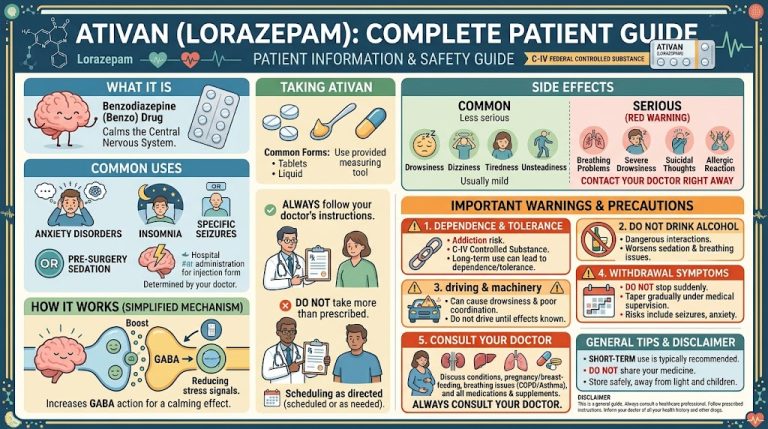
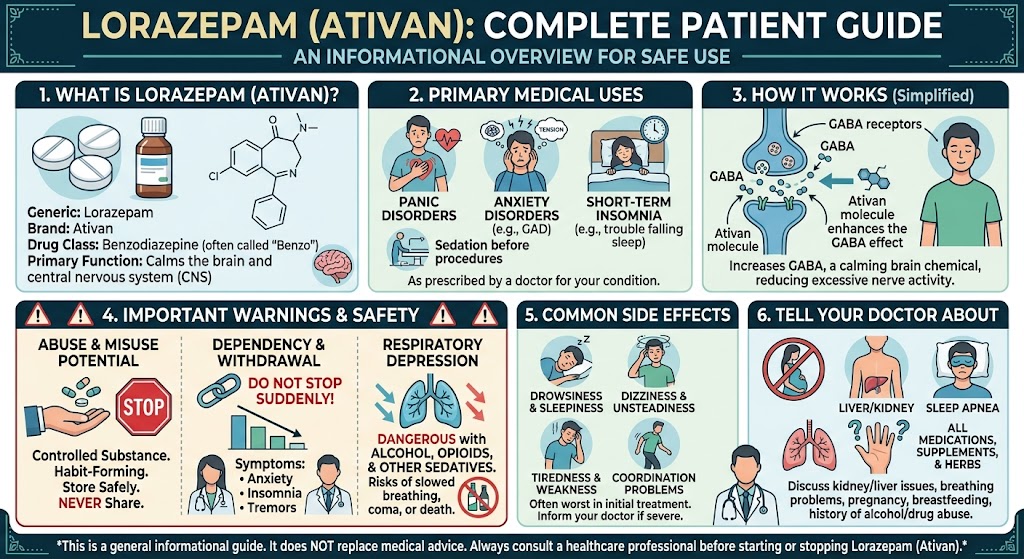
Lorazepam is a potent prescription medication belonging to the benzodiazepine class of drugs. Clinically, it acts as a central nervous system (CNS) depressant. Because of its direct action on the brain’s reward pathways and its potential for abuse, physical dependence, and psychological addiction, the United States Drug Enforcement Administration (DEA) strictly regulates Lorazepam as a Schedule IV controlled substance.
Lorazepam is available in several formulations to accommodate different medical needs:
- Oral tablets (immediate-release)
- Oral liquid concentrate
- Injectable solutions (administered intravenously or intramuscularly in hospital settings)
Lorazepam is considered an “intermediate-acting” benzodiazepine. It typically begins to work within 45 to 90 minutes when taken orally and has an elimination half-life of roughly 10 to 20 hours, striking a balance between fast relief and sustained symptom control.
Is Lorazepam the Same as Ativan?
Yes. Lorazepam is the generic name of the active pharmaceutical ingredient, while Ativan is the brand name originally developed and patented by the pharmaceutical company Wyeth (now part of Pfizer).
When a physician prescribes Ativan, the pharmacy will frequently dispense generic lorazepam to satisfy insurance requirements. The FDA mandates that generic lorazepam must have the exact same active ingredient, strength, safety profile, and clinical efficacy as brand-name Ativan. The only practical differences are the physical appearance of the pill (shape, color, and scoring) and the inactive ingredients (binders and fillers) used by different generic manufacturers.
How Lorazepam Works
To understand how Lorazepam calms the body, it is helpful to look at the brain’s neurological communication system. The central nervous system relies on neurotransmitters (chemical messengers) to send signals between nerve cells.
The primary inhibitory neurotransmitter in the human brain is gamma-aminobutyric acid (GABA). GABA functions as the brain’s natural “brake system.” During a severe anxiety episode or panic attack, the brain’s electrical activity fires rapidly and chaotically. GABA’s role is to slow this electrical excitation down.
Lorazepam works by binding to specific sites on the GABA-A receptors. The medication does not manufacture new GABA; instead, it exponentially increases the efficiency of the GABA that is already circulating in the brain. By enhancing this natural braking system, Lorazepam rapidly depresses the central nervous system. This pharmacological action results in muscle relaxation, the cessation of acute panic, and a profound, sometimes overwhelming, sense of calm.
FDA-Approved Uses of Lorazepam
Lorazepam has a unique metabolic profile that makes it highly versatile. It is officially approved by the FDA for the following clinical indications:
Anxiety Disorders
Lorazepam is indicated for the management of anxiety disorders. It is particularly effective for Generalized Anxiety Disorder (GAD), characterized by chronic, excessive worry that disrupts daily life. Because of the risk of dependence, psychiatrists typically prescribe Lorazepam as a short-term “bridge” therapy to provide immediate relief while long-term, non-addictive medications (such as SSRI or SNRI antidepressants) take effect.
Short-Term Anxiety Relief
The medication is highly effective for the short-term relief of severe anxiety symptoms or anxiety associated with depressive symptoms. It is frequently prescribed for acute, situational anxiety—such as the sudden onset of a panic attack, trauma responses, or severe situational stressors (e.g., extreme fear of flying).
Preoperative Sedation
In hospital, surgical, and dental settings, injectable or oral Lorazepam is widely used as a premedication. It is administered prior to procedures to relieve intense anxiety, induce a state of deep relaxation, and cause a specialized effect known as anterograde amnesia. This amnesic effect temporarily prevents the brain from forming new memories, meaning the patient will remember very little, if anything, about the stressful medical procedure.
Benefits and Clinical Uses
When utilized strictly as prescribed, Lorazepam offers several significant clinical benefits:
- Predictable Metabolism: Lorazepam is metabolized in the liver via a process called glucuronidation. Unlike other benzodiazepines (such as diazepam) that require complex oxidative liver enzymes, Lorazepam does not produce active, lingering metabolites. This makes it generally safer for older adults and patients with mild liver impairment.
- High Efficacy: It is highly reliable at halting severe, acute panic and relaxing extreme physical tension.
- Fewer “Hangover” Effects: Because of its intermediate half-life and lack of active metabolites, patients are less likely to experience the prolonged, multi-day grogginess common with longer-acting benzodiazepines.
Dosage Information
Warning: Dosing is highly individualized based on the specific condition, the patient’s age, weight, and overall health. Never alter your dose, skip a dose, or take extra medication without explicit instructions from your prescribing healthcare provider.
Table 1: Lorazepam Dosage Overview
| Indication | Typical Starting Dose (Adults) | Maximum Daily Dose | Dosing Frequency |
| Anxiety Disorders | 1 mg to 2 mg | 10 mg (rarely utilized) | Divided into 2 or 3 doses |
| Insomnia (Anxiety-induced) | 2 mg to 4 mg | 4 mg | Taken once at bedtime |
| Preoperative Sedation | 2 mg to 4 mg (or weight-based) | Based on clinical setting | Once, before the procedure |
| Geriatric Patients | 0.5 mg to 1 mg | 2 mg | Divided doses, heavily monitored |
How to Take Lorazepam Safely
Because Lorazepam is a powerful central nervous system depressant, strict adherence to safety protocols is absolutely mandatory:
- Exact Compliance: Take the exact dose prescribed. Do not take it more frequently or in larger amounts than directed, even if your anxiety feels severe.
- Tapering is Mandatory: Never stop taking Lorazepam cold turkey. Abrupt cessation can cause severe withdrawal, including rebound panic and life-threatening seizures.
- Avoid Certain Activities: Do not drive a car, operate heavy machinery, or make critical life decisions until you know exactly how the medication affects your alertness and reaction times.
- Secure Your Medication: Keep your prescription in a safe, locked place to prevent accidental ingestion by children or theft by individuals seeking to misuse controlled substances.
Common Side Effects
By intentionally slowing down brain activity, Lorazepam predictably causes side effects related to sedation, cognitive slowing, and diminished motor control.
Table 2: Common vs Serious Side Effects
| Common Side Effects (Often diminish over time) | Serious Side Effects (Require Immediate Emergency Care) |
| Drowsiness, lethargy, and profound fatigue | Severe respiratory depression (slowed, shallow breathing) |
| Dizziness, unsteadiness, or loss of balance | Paradoxical reactions (extreme agitation, aggression, hallucinations) |
| Muscle weakness | Worsening depression or emergence of suicidal thoughts |
| Memory impairment (difficulty recalling recent events) | Jaundice (yellowing of the skin or eyes) |
| Dry mouth | Signs of a severe allergic reaction (hives, swelling of the throat) |
Serious Risks and Warnings
The FDA requires several strict Boxed Warnings on Lorazepam due to its profound, life-threatening risks.
Dependence
Physical and psychological dependence can occur rapidly, even within a few weeks of taking Lorazepam exactly as prescribed. The risk increases exponentially with higher doses, long-term use, and in individuals with a personal or family history of substance use disorder.
Tolerance
Over time, the brain adapts to the constant presence of the drug. Patients build a tolerance, meaning the original dose stops providing the same level of anxiety relief. This phenomenon can tempt patients to dangerously escalate their dosage without a doctor’s permission.
Withdrawal Symptoms
Benzodiazepine withdrawal syndrome is a severe medical condition. If Lorazepam is stopped abruptly, the central nervous system becomes hyper-excitable. Symptoms of abrupt withdrawal include extreme rebound panic, profuse sweating, severe tremors, muscle cramps, psychosis, and continuous, life-threatening seizures.
Respiratory Depression
While Lorazepam alone rarely causes fatal respiratory depression in healthy adults, it significantly suppresses the autonomic drive to breathe. If combined with other central nervous system depressants (especially opioids, alcohol, or barbiturates), the breathing reflex can stop entirely, leading to hypoxia, coma, and death.
Sedation Risks and Cognitive Impairment
Excessive sleepiness is highly common. Long-term use is frequently associated with ongoing anterograde amnesia, delayed reaction times, and general cognitive blunting (feeling “foggy”).
Fall Risk in Older Adults
Elderly patients are incredibly sensitive to the effects of benzodiazepines. Even low doses can cause over-sedation and ataxia (loss of balance). This leads to a significantly increased risk of devastating falls, hip fractures, and traumatic head injuries. Geriatric patients always require specialized, low-dose protocols.
Drug Interactions
Lorazepam interacts dangerously with numerous substances. These interactions can drastically amplify the drug’s depressive effects on the brain and respiratory system.
Table 3: Drug Interactions
| Drug Class / Substance | Examples | Potential Interaction Risk |
| Opioids (Boxed Warning) | Oxycodone, Morphine, Fentanyl, Hydrocodone | CRITICAL: Causes profound sedation, respiratory failure, coma, and death. |
| Alcohol | Beer, Wine, Spirits | Amplifies CNS depression; extremely high risk of fatal overdose and motor failure. |
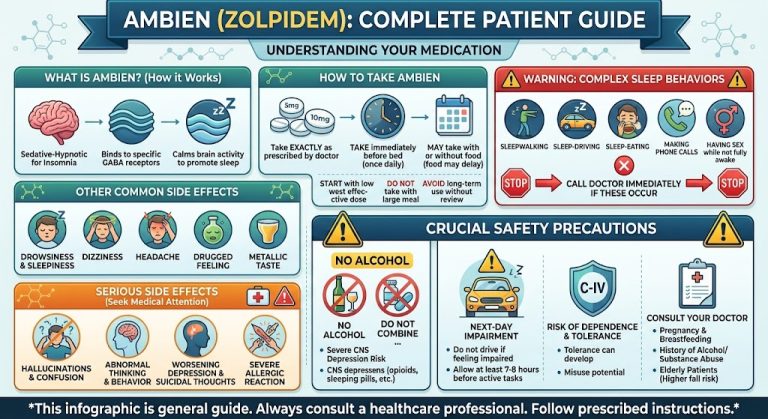
| Other CNS Depressants | Sleep aids (Ambien), Barbiturates, Muscle Relaxants | Additive sedative effects; severe risk of respiratory arrest. |
| First-Generation Antihistamines | Diphenhydramine (Benadryl) | Increased drowsiness, confusion, and risk of over-sedation. |
| Valproate / Probenecid | Depakote, Probalan | Can inhibit glucuronidation, increasing Lorazepam blood levels. |
Who Should Avoid Lorazepam?
Lorazepam is contraindicated (should not be used) in patients with specific underlying medical conditions.
Table 4: Safety Precautions
| Patient Profile | Reason for Avoidance or Extreme Caution |
| Acute Narrow-Angle Glaucoma | Benzodiazepines can dangerously increase intraocular pressure. |
| Severe Respiratory Insufficiency | Conditions like severe COPD or sleep apnea; breathing may stop during sleep. |
| History of Substance Use Disorder | Extremely high risk of addiction, misuse, and overdose relapse. |
| Severe Liver Failure | While safer than some benzos, profound liver failure still impairs drug clearance. |
Pregnancy and Breastfeeding Considerations
Pregnancy: Lorazepam is generally contraindicated during pregnancy. The medication crosses the placental barrier. Use during the first trimester has been associated with an increased risk of congenital malformations. Use late in the third trimester can cause the newborn to suffer from “floppy infant syndrome” (hypotonia, lethargy, and breathing difficulties) and experience severe neonatal withdrawal symptoms.
Breastfeeding: Lorazepam is excreted in human breast milk. Because infants cannot metabolize the drug efficiently, it can accumulate in their system, causing severe lethargy, poor feeding, and dangerous weight loss. Breastfeeding while taking Lorazepam is strictly not recommended.
Signs of Overdose
A Lorazepam overdose is a medical emergency that requires immediate, life-saving intervention. Call 911 immediately if you suspect an overdose.
Symptoms of an overdose include:
- Extreme drowsiness leading to unresponsiveness
- Mental confusion and severely slurred speech
- Profound loss of coordination (inability to stand or walk)
- Slowed, shallow, or irregular breathing
- Dangerously low blood pressure
- Coma
In emergency hospital settings, medical professionals may carefully administer Flumazenil, a specialized benzodiazepine receptor antagonist, to rapidly reverse the sedative effects.
Storage and Disposal
- Storage: Keep Lorazepam in its original, child-proof container at room temperature, away from moisture and direct heat (do not store it in a humid bathroom). Because it is a controlled substance, it must be stored in a locked, secure location.
- Disposal: Unused medication should never be thrown in the household trash or flushed down the toilet. Utilize a DEA-authorized drug take-back program or pharmacy disposal kiosk to prevent accidental ingestion or illicit misuse.
Frequently Asked Questions
1. Is Lorazepam the same as Xanax?
No. While they both belong to the benzodiazepine class and treat anxiety, they are different medications. Xanax (alprazolam) has a shorter onset and duration, making it highly specific for sudden panic attacks. Lorazepam (Ativan) has a slightly slower onset but a longer duration of action, making it useful for both sustained anxiety and preoperative sedation.
2. How long does Lorazepam stay in your system?
Lorazepam has a biological half-life of 10 to 20 hours. Generally, it takes about 3 to 5 days for the drug to be completely eliminated from the bloodstream, though it can be detected in standard urine drug screens for up to 6 days.
3. Can I drink a single glass of wine while taking Lorazepam?
No. Medical guidelines and FDA warnings strictly prohibit any alcohol consumption while taking Lorazepam. Combining these two central nervous system depressants creates a synergistic effect that can easily lead to unpredictable, fatal respiratory depression.
4. Will Lorazepam help me sleep?
While it is not classified primarily as a sleeping pill (hypnotic), its strong sedative properties will induce sleep. Doctors sometimes prescribe it short-term to manage severe, anxiety-induced insomnia.
5. Does Lorazepam lower blood pressure?
Lorazepam is not a blood pressure medication. However, by effectively calming the central nervous system and mitigating the severe adrenaline spikes associated with acute anxiety, it can cause a secondary, temporary decrease in blood pressure.
6. Why is my doctor taking me off Lorazepam?
Due to the high risk of dependence, tolerance, and the availability of safer, non-addictive alternatives (like SSRIs or CBT therapy), clinical guidelines recommend limiting benzodiazepine prescriptions to severe, short-term use only.
7. Is 1 mg of Lorazepam a high dose?
For a healthy adult treating anxiety, 1 mg is generally considered a standard, moderate dose. However, for an elderly patient or someone taking other sedating medications, 1 mg could be dangerously high. Dosing is highly relative.
8. What is anterograde amnesia?
Anterograde amnesia is a known side effect where the brain loses the ability to form new memories while the drug is active. This property is intentionally leveraged in hospital settings to help patients forget the stress of surgical procedures.
9. How do I safely stop taking Lorazepam?
You must work closely with your prescribing physician to create a tapering schedule. This involves slowly reducing your dose by small increments over weeks or months to allow your brain’s GABA receptors to heal and adjust safely without triggering withdrawal seizures.
10. Is Lorazepam safe for elderly patients?
It is used with extreme caution. While its metabolic pathway (glucuronidation) makes it safer for the elderly than diazepam, older adults are still highly susceptible to over-sedation, confusion, and dangerous falls. Specialized low doses are mandatory.
11. Can Lorazepam cure my anxiety disorder?
No. Lorazepam manages and suppresses the physical and neurological symptoms of anxiety chemically. It does not cure the underlying psychological causes of the disorder.
12. What happens if I miss a dose?
Take the missed dose as soon as you remember. However, if it is almost time for your next scheduled dose, skip the missed one. Never take two doses at once to make up for a missed pill.
13. Does Lorazepam cause weight gain?
Direct metabolic weight gain is not a recognized pharmacological side effect. However, the profound sedation and reduction in daily physical activity caused by the medication can result in secondary weight fluctuations over time.
14. Why is Lorazepam used before surgery?
It is highly effective at reducing severe preoperative anxiety, relaxing the body, and inducing temporary amnesia, making the surgical experience significantly less traumatic for the patient.
15. Can my dog take my Lorazepam for thunderstorm anxiety?
Veterinarians do occasionally prescribe lorazepam for dogs with severe phobias. However, you must never give a human prescription to a pet. Animal dosing is completely different, and human pills can be highly toxic or fatal to pets without a vet’s direct guidance.
Conclusion
Lorazepam (Ativan) remains an indispensable pharmacological tool for the management of severe anxiety disorders, acute psychological distress, and preoperative sedation. Its predictable metabolism and intermediate duration provide robust, essential stabilization of the central nervous system.
However, the profound efficacy of Lorazepam is inextricably linked to severe responsibilities. Its classification as a Schedule IV controlled substance highlights the critical risks of dependence, tolerance, and life-threatening withdrawal. By strictly adhering to prescribed dosages, understanding the absolute danger of combining it with other depressants like alcohol or opioids, and working closely with a healthcare provider to manage tapering, patients can harness the therapeutic benefits of Lorazepam safely and effectively.