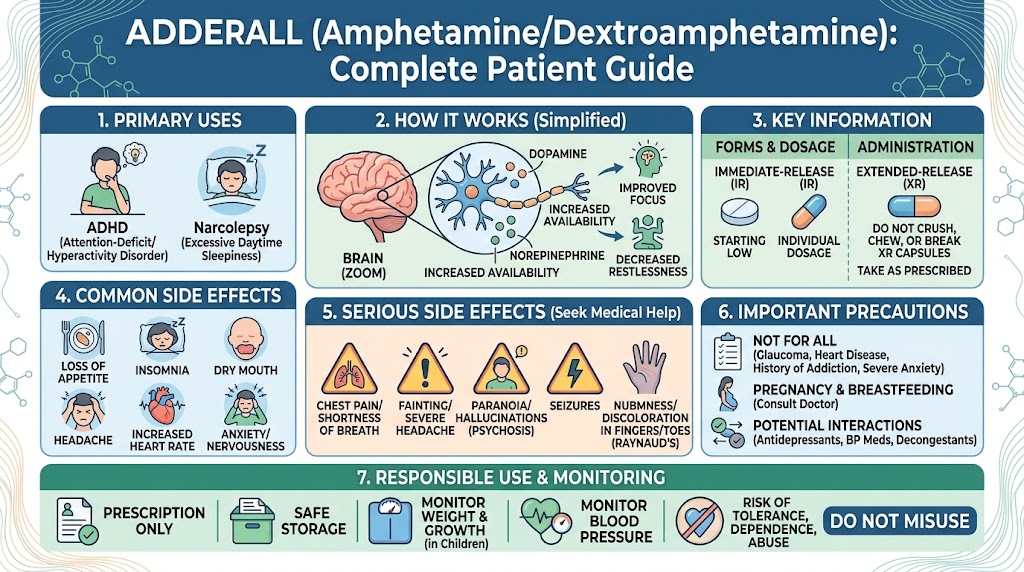
Adderall (Amphetamine/Dextroamphetamine): Complete Patient Guide
Quick Answer Box : Adderall is a prescription central nervous system (CNS) stimulant that contains a combination of amphetamine and dextroamphetamine. It is FDA-approved to treat Attention-Deficit/Hyperactivity Disorder (ADHD) and narcolepsy. The medication works by increasing the levels of dopamine and norepinephrine in the brain, which helps improve focus, reduce impulsivity, and promote wakefulness.
Best Way to Buy Adderall Online
| Website | 5-Star Reviews | Shipping Speed | Action |
| Dose Pure | 1,780 Reviews | 2-5 Days | Click Here to Buy |
| Elite Care | 400 Reviews | 1-2 Days | Click Here to Buy |
| Express Rx | 760 Reviews | 3-7 Days | Click Here to Buy |
| Fast Pill | 650 Reviews | 2 Days | Click Here to Buy |
| Fast Relief | 535 Reviews | 2-3 Days | Click Here to Buy |
Introduction
Managing neurodevelopmental and sleep disorders requires careful clinical intervention and a deep understanding of the available treatments. Adderall, a highly recognizable brand name in psychiatric medicine, has transformed the management of Attention-Deficit/Hyperactivity Disorder (ADHD) and narcolepsy for millions of patients.
However, because of its profound effects on the brain’s chemistry, it demands deep respect, strict adherence to medical guidance, and thorough patient education. This complete guide breaks down exactly what Adderall is, how it functions in the human body, its approved uses, and the critical safety parameters every patient and caregiver must know.
What Is Adderall?
Adderall is the brand name for a combination prescription medication composed of mixed amphetamine salts. Specifically, it contains equal parts (by weight) of four distinct salts:
- Dextroamphetamine saccharate
- Amphetamine aspartate monohydrate
- Dextroamphetamine sulfate
- Amphetamine sulfate
In clinical terms, it is classified as a central nervous system (CNS) stimulant. Because it directly alters brain chemistry and has a well-documented capacity for psychological and physical dependence, the United States Drug Enforcement Administration (DEA) classifies Adderall as a Schedule II controlled substance. This means its distribution is strictly regulated, and it requires a tightly monitored prescription from a licensed healthcare provider.
Adderall is manufactured in two primary formats:
- Adderall IR (Immediate-Release): Typically lasts 4 to 6 hours and is often taken multiple times a day.
- Adderall XR (Extended-Release): A capsule designed to dissolve slowly, providing a steady dose throughout the day, generally lasting 10 to 12 hours.
How Adderall Works
To understand how Adderall works, it helps to understand the brain’s communication system. The brain relies on chemical messengers called neurotransmitters to send signals between nerve cells (neurons).
In individuals with ADHD, the neural pathways that manage executive function, attention, and reward processing are often under-stimulated. Adderall bridges this gap by targeting two primary neurotransmitters:
- Dopamine: Associated with motivation, pleasure, reward, and motor function.
- Norepinephrine: Associated with alertness, attention, and the body’s “fight or flight” response.
Adderall forces the brain to release more of these neurotransmitters into the synapse (the gap between neurons) while simultaneously blocking their reuptake (reabsorption). By keeping dopamine and norepinephrine active in the brain for a longer period, Adderall stimulates the prefrontal cortex—the area of the brain responsible for organization, focus, and impulse control.
FDA-Approved Uses
Adderall is strictly indicated and FDA-approved for only two medical conditions.
Attention-Deficit/Hyperactivity Disorder (ADHD)
ADHD is a neurodevelopmental disorder characterized by an ongoing pattern of inattention, hyperactivity, and impulsivity that interferes with daily functioning or development. For patients with ADHD, Adderall acts almost paradoxically; while it is a stimulant, it provides a calming, organizing effect on the hyperactive brain. It helps patients:
- Sustain focus on tedious or complex tasks.
- Filter out environmental distractions.
- Control hyperactive movements and impulsive verbal outbursts.
- Improve short-term working memory.
Narcolepsy
Narcolepsy is a chronic neurological disorder that affects the brain’s ability to control sleep-wake cycles. Individuals with narcolepsy experience severe daytime sleepiness and sudden, uncontrollable sleep attacks. Because of its potent wakefulness-promoting properties, Adderall is prescribed to help patients remain alert, active, and awake during standard daytime hours, significantly improving their safety and quality of life.
Potential Benefits
When taken exactly as prescribed by an individual accurately diagnosed with ADHD or narcolepsy, the clinical benefits of Adderall can be life-changing:
- Enhanced Executive Function: Patients often report a newfound ability to plan, organize, and execute daily tasks that previously felt overwhelming.
- Improved Academic and Occupational Performance: By sustaining attention, individuals can perform closer to their actual cognitive potential in school or at work.
- Emotional Regulation: While not an antidepressant, better impulse control often leads to fewer emotional outbursts and a reduction in the frustration associated with untreated ADHD.
- Safety in Narcolepsy: Dramatically reduces the risk of dangerous sleep attacks while driving or operating machinery.
Dosage Information
Disclaimer: Dosing is highly individualized based on the patient’s age, diagnosis, severity of symptoms, and individual metabolic response. The following table represents standard clinical starting points. Always follow your prescriber’s exact instructions.
Dosage Overview Table
| Condition / Age Group | Formulation | Typical Starting Dose | Max Recommended Daily Dose |
| ADHD (Children 3-5 yrs) | IR only | 2.5 mg daily | 40 mg (rarely maximized) |
| ADHD (Children 6-12 yrs) | IR or XR | 5 mg to 10 mg daily | 30 mg (XR) or 40 mg (IR) |
| ADHD (Adolescents 13-17) | XR preferred | 10 mg daily | 40 mg |
| ADHD (Adults 18+) | IR or XR | 5 mg to 20 mg daily | 40 mg (IR) / 60 mg (XR) |
| Narcolepsy (Adults) | IR | 10 mg daily | 60 mg |
How to Take Adderall Safely
To maximize therapeutic benefits and minimize adverse effects, patients must adhere strictly to these safety guidelines:
- Follow the Schedule: Take the medication at the same time every day. For IR formulations, avoid taking doses late in the afternoon to prevent severe insomnia.
- Swallow XR Whole: Never crush, chew, or divide an Adderall XR capsule. Doing so destroys the time-release mechanism, flooding the body with a massive dose of amphetamines all at once, which can be fatal. (The capsule can be opened and sprinkled on a spoonful of applesauce, provided it is swallowed immediately without chewing).
- Mind Your Diet: Avoid highly acidic foods, citrus juices (like orange or grapefruit juice), and Vitamin C supplements within an hour before and after taking Adderall. High gastrointestinal acidity significantly decreases the absorption of amphetamines.
- Do Not Share: Sharing this medication is illegal and highly dangerous. What is therapeutic for an ADHD brain can be toxic or addictive to an unprescribed user.
- Monitor Vitals: Regular blood pressure and heart rate checks are essential during treatment.
Common Side Effects
Like all medications that alter brain chemistry, Adderall presents a range of side effects. Most common side effects emerge during the first few weeks of treatment and may subside as the body adjusts.
Common vs Serious Side Effects Table
| Common Side Effects (Usually Manageable) | Serious Side Effects (Require Immediate Medical Care) |
| Loss of appetite and weight loss | Chest pain, shortness of breath, fainting |
| Dry mouth (xerostomia) | Hallucinations, paranoia, or severe agitation |
| Difficulty falling asleep (insomnia) | Uncontrolled muscle twitching or tics (Tourette’s-like) |
| Headache and dizziness | Numbness, pain, or color change in fingers/toes |
| Increased heart rate | Seizures or convulsions |
| Stomach ache or nausea | Signs of severe allergic reaction (hives, swelling) |
Serious Risks and Warnings
The FDA requires a boxed warning (the strictest warning label) on Adderall due to its profound risks.
Dependence and Misuse Risk
Because it heavily stimulates the brain’s reward center (dopamine), Adderall carries a high potential for psychological and physical addiction. Misusing the drug—such as taking higher doses than prescribed, crushing and snorting it, or using it without a prescription—can lead to severe substance use disorder, overdose, and sudden cardiac death.
Cardiovascular Warnings
Stimulants cause the blood vessels to constrict, raising blood pressure and heart rate. In patients with pre-existing structural heart defects, arrhythmias, or severe hypertension, Adderall has been linked to sudden cardiac death, strokes, and myocardial infarction (heart attack).
Mental Health Effects
Adderall can exacerbate existing psychiatric conditions. It may cause treatment-emergent psychotic or manic symptoms (e.g., hallucinations, delusional thinking, mania) in patients with no prior history. It can also worsen symptoms of preexisting bipolar disorder, severe anxiety, and Tourette’s syndrome.
Growth Considerations in Children
Long-term use of CNS stimulants in pediatric patients has been associated with temporary suppression of growth (both height and weight). Pediatricians closely monitor growth trajectories and may recommend “drug holidays” (e.g., stopping the medication during summer breaks) to allow for growth catch-up.
Sleep Disturbances
Because it promotes extreme wakefulness, taking the medication too late in the day will lead to severe insomnia. Chronic sleep deprivation negates the focus-enhancing benefits of the drug and severely impacts overall health.
Drug Interactions
Adderall interacts with numerous other medications, altering its efficacy or creating dangerous bodily reactions.
Drug Interactions Table
| Drug Class | Examples | Potential Interaction Risk |
| MAOIs (Antidepressants) | Nardil, Parnate, Marplan | CRITICAL: Can cause fatal hypertensive crisis. Must wait 14 days after stopping an MAOI before starting Adderall. |
| SSRIs / SNRIs | Prozac, Zoloft, Cymbalta | Increased risk of Serotonin Syndrome (agitation, hallucinations, rapid heart rate, fever). |
| Antacids / GI Meds | Tums, Nexium, Prilosec | Alkalinizes the stomach, causing the body to absorb too much amphetamine too quickly. |
| Blood Pressure Meds | Beta-blockers, ACE inhibitors | Adderall can counteract the effects of these drugs, rendering them ineffective at controlling blood pressure. |
| Vitamin C / Ascorbic Acid | Supplements, Citrus juices | Acidifies the stomach, causing the body to excrete the amphetamine before it can be absorbed. |
Precautions
Before starting this medication, patients must undergo a thorough medical history screening.
Safety Precautions Table
| Medical Condition | Precautionary Action Required |
| Pre-existing Heart Conditions | Absolute contraindication or requires clearance from a cardiologist. |
| History of Substance Abuse | Requires extreme caution, strict monitoring, or alternative non-stimulant therapies. |
| Hyperthyroidism | Contraindicated; stimulants can dangerously exacerbate overactive thyroid symptoms. |
| Glaucoma | Contraindicated; amphetamines can increase intraocular pressure. |
| Pregnancy and Nursing | Risk vs. Benefit analysis required. Amphetamines pass into breast milk and cross the placenta. |
Signs of Overdose
An Adderall overdose is a life-threatening medical emergency. Overamping (stimulant overdose) requires immediate emergency intervention (Call 911).
Critical Overdose Symptoms Include:
- Severe restlessness, tremors, or hyperreflexia
- Rapid breathing and confusion
- Aggressiveness, panic states, or profound psychosis
- Fever (hyperpyrexia) and muscle breakdown (rhabdomyolysis)
- Irregular heartbeat (arrhythmia) leading to cardiovascular collapse
- Nausea, vomiting, diarrhea, and severe abdominal cramps
- Ultimately, untreated overdose can result in convulsions, coma, and death.
Storage and Disposal
- Storage: Keep Adderall in its original prescription bottle, tightly closed, at room temperature (away from light, moisture, and extreme heat). Because it is a highly targeted drug for theft, it must be stored in a secure, locked location away from roommates, guests, and children.
- Disposal: Never flush Adderall down the toilet unless explicitly instructed, and do not throw it in the household trash. Utilize DEA-authorized community drug take-back programs to safely dispose of unused pills.
Frequently Asked Questions
1. Is Adderall essentially legal methamphetamine?
No. While they belong to the same chemical family (amphetamines) and share similar molecular structures, methamphetamine contains an extra methyl group that allows it to cross the blood-brain barrier much faster and more forcefully, making it vastly more neurotoxic and addictive. Adderall is formulated for controlled clinical therapy.
2. How long does Adderall stay in your system?
The half-life of Adderall is roughly 10 to 13 hours. It generally takes about 2 to 3 days for the drug to completely clear the blood, though it can be detected in urine for up to 72-96 hours, and in hair follicles for up to 90 days.
3. What is an “Adderall crash”?
An Adderall crash occurs as the medication wears off and dopamine levels sharply drop. Symptoms include severe fatigue, irritability, depression, and increased hunger. Taking the medication consistently as prescribed and maintaining good nutrition can help mitigate the crash.
4. Can I drink coffee while taking Adderall?
It is highly recommended to avoid or severely limit caffeine. Both are CNS stimulants. Combining them drastically increases the risk of jitteriness, severe anxiety, palpitations, and high blood pressure.
5. Why do I feel calm on Adderall when others feel hyper?
If you have ADHD, your brain is under-stimulated. Adderall brings your dopamine and norepinephrine up to a baseline level, allowing your brain to “quiet down” and focus. For a person without ADHD, the drug pushes them above baseline, causing hyper-stimulation and euphoria.
6. Does Adderall change your personality?
At the correct therapeutic dose, it should not change your core personality; it should simply allow you to focus and control impulses. If you feel like a “zombie,” emotionless, or overly rigid, your dosage is likely too high, and you should consult your doctor.
7. Is there a generic version of Adderall?
Yes. The generic version is prescribed as “mixed amphetamine salts” or “dextroamphetamine/amphetamine.” The FDA requires generics to have the exact same active ingredients and efficacy as the brand name.
8. Can I take Adderall only on days I need to study or work?
Some doctors allow “as-needed” dosing to prevent tolerance build-up, while others prefer consistent daily use to maintain neurochemical stability. Always ask your prescribing physician which protocol is right for your specific treatment plan.
9. What should I do if I miss a dose?
If you miss a dose of Adderall IR, take it when you remember, unless it is late afternoon or evening (which will cause insomnia). If you miss an XR dose, skip it entirely for the day; do not double up the next day.
10. How do I know if my dose is too high?
Signs of a dosage that is too high include severe jaw clenching, hyper-focusing on the wrong things, intense anxiety or paranoia, racing heart, and complete inability to sleep.
11. Are there non-stimulant alternatives to Adderall?
Yes. Medications like Strattera (atomoxetine), Intuniv (guanfacine), and Qelbree (viloxazine) are FDA-approved non-stimulant medications for ADHD that do not carry the same risk of abuse or dependence.
12. Does Adderall expire?
Yes, like all medications, it has an expiration date, usually one year from the date it was dispensed. Expired Adderall may lose its potency and should be safely disposed of.
13. Why does orange juice make Adderall less effective?
Citrus juices contain high amounts of Vitamin C (ascorbic acid). A highly acidic gastrointestinal tract prevents the proper absorption of amphetamines into the bloodstream and forces the kidneys to excrete the drug faster.
14. Can adults develop ADHD later in life and be prescribed Adderall?
ADHD is a neurodevelopmental disorder that begins in childhood, though it frequently goes undiagnosed until adulthood. Adults diagnosed later in life are regularly and successfully treated with Adderall.
15. Can I travel internationally with my prescription?
Because Adderall is a strictly controlled narcotic in many countries (and entirely illegal in some, like Japan), you must research the laws of your destination country, carry a doctor’s note, and keep the medication in its original, clearly labeled pharmacy bottle.
Conclusion
Adderall remains one of the most effective and widely prescribed treatments for Attention-Deficit/Hyperactivity Disorder and narcolepsy. By enhancing critical neurotransmitters, it offers patients the ability to harness their focus, regulate their impulses, and drastically improve their daily functionality. However, its classification as a Schedule II controlled substance underscores the absolute necessity for medical supervision. By adhering to prescribed dosages, understanding the risk of drug interactions, and communicating openly with healthcare providers, patients can navigate their treatment safely and effectively.