Klonopin (Clonazepam): Complete Patient Guide
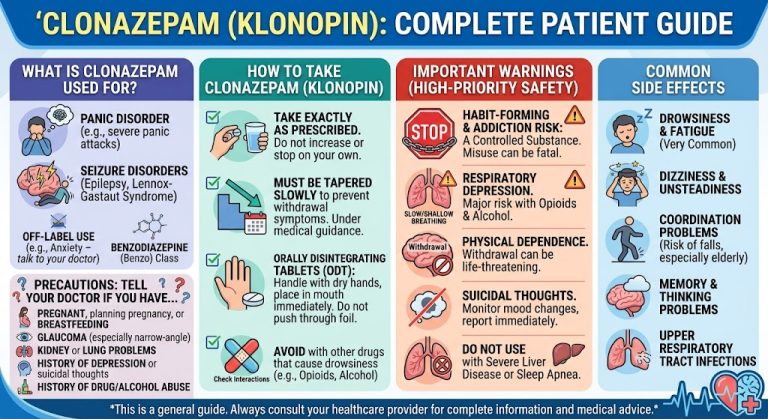
Quick Answer Box : Klonopin is a brand-name prescription medication containing the active ingredient clonazepam. It is a long-acting benzodiazepine FDA-approved to treat panic disorder and specific seizure disorders like Lennox-Gastaut syndrome. Klonopin works by increasing GABA, a calming chemical in the brain. Because of its high potential for dependence, severe withdrawal, and dangerous interactions with opioids and alcohol, it must be used strictly under medical supervision.
Best Way to Buy Klonopin Online
| Website | 5-Star Reviews | Shipping Speed | Action |
| Rx Care Hubs | 110 Reviews | 2-5 Days | Click Here to Buy |
| Rx Central Store | 200 Reviews | 1-2 Days | Click Here to Buy |
| Rx Directs | 360 Reviews | 3-7 Days | Click Here to Buy |
| Rx Meds Store | 150 Reviews | 2 Days | Click Here to Buy |
| Rx Net Vault | 535 Reviews | 2-3 Days | Click Here to Buy |
Living with unpredictable seizure disorders or sudden, debilitating panic attacks can severely impact an individual’s quality of life. When these neurological and psychological conditions become unmanageable with standard therapies, healthcare providers often turn to highly specific and potent pharmacological interventions. Klonopin, the brand name for the generic drug clonazepam, is one of the most effective and frequently prescribed medications for these complex conditions.
First patented in the 1960s as an anticonvulsant to treat epilepsy, Klonopin’s profound ability to calm the central nervous system eventually led to its widespread clinical use in treating severe anxiety and panic disorders. However, its powerful efficacy is inextricably linked to significant risks.
Understanding how Klonopin works, its precise dosage requirements, and the profound safety warnings associated with its use is essential. This comprehensive, evidence-based guide breaks down the clinical realities of Klonopin to help patients and caregivers navigate their treatment protocols safely and effectively.
What Is Klonopin?
Klonopin is a brand-name prescription medication that belongs to a class of psychoactive drugs known as benzodiazepines. It functions as a central nervous system (CNS) depressant. Because it affects the brain’s reward centers and can lead to physical dependence, psychological addiction, and misuse, the United States Drug Enforcement Administration (DEA) regulates Klonopin as a Schedule IV controlled substance.
Klonopin is available in several formulations:
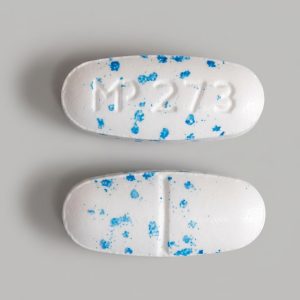
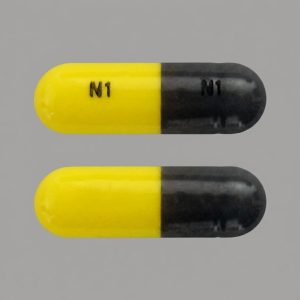
- Standard oral tablets (scored and unscored, often featuring a K-shaped perforation).
- Orally disintegrating tablets (wafers) designed to dissolve rapidly on the tongue.
Unlike many short-acting medications in the benzodiazepine family, Klonopin is classified as a long-acting medication. It has an elimination half-life of typically 30 to 40 hours. This means it stays active in the body for an extended period, providing sustained relief and preventing the rapid “rebound” symptoms frequently observed with fast-acting, short-duration drugs.
Is Klonopin the Same as Clonazepam?
Yes. Clonazepam is the generic name of the active pharmaceutical ingredient, while Klonopin is the brand name originally developed and marketed by Roche.
When a doctor prescribes Klonopin, the pharmacy may dispense generic clonazepam. From a clinical perspective, the FDA requires generic clonazepam to have the exact same active ingredient, strength, dosage form, and route of administration as brand-name Klonopin. The primary differences are usually the pill’s appearance (color, shape, or lack of the “K” cutout) and the specific inactive binding ingredients used by different generic manufacturers.
How Klonopin Works
To understand how Klonopin works, you must look at the human central nervous system, which relies on a complex network of chemical messengers (neurotransmitters) to function properly.
One of the brain’s most important inhibitory neurotransmitters is gamma-aminobutyric acid (GABA). GABA acts as the brain’s natural “brake pedal.” When you experience severe stress or an epileptic seizure, the electrical activity in your brain is firing too rapidly and chaotically. GABA’s primary job is to slow this hyperactive electrical activity down.
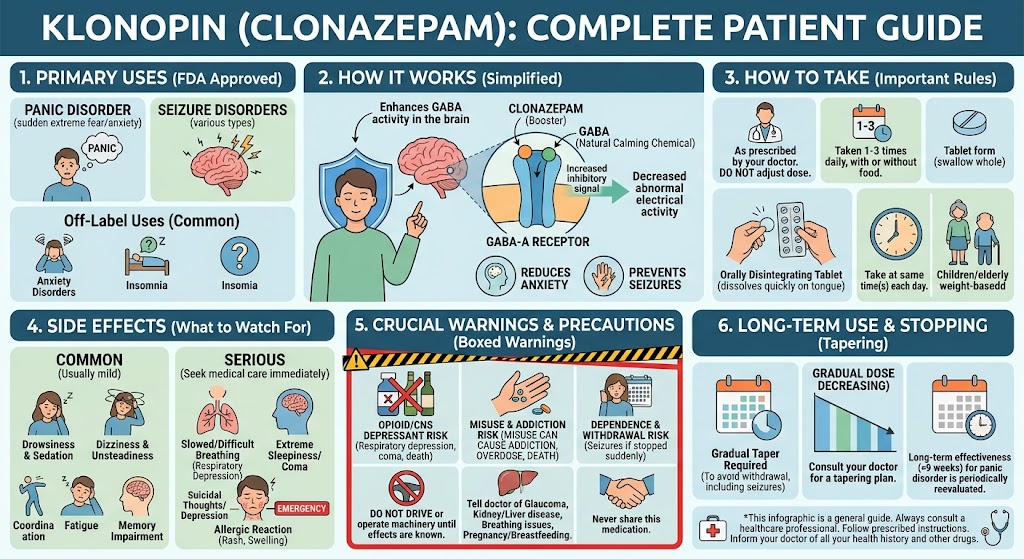
Klonopin works by binding directly to specific GABA-A receptors in the brain. It does not artificially create new GABA; rather, it drastically amplifies the efficiency of the GABA that is already present. By forcing the brain’s natural brakes to work harder and longer, Klonopin rapidly depresses the central nervous system. This stops the erratic electrical misfires that cause seizures and shuts down the hyperactive neurological feedback loop that causes panic attacks.
FDA-Approved Uses
The FDA has specifically approved Klonopin for two distinct categories of medical conditions. While it is sometimes prescribed “off-label” by doctors for conditions like restless legs syndrome or severe insomnia, its officially approved indications are:
Panic Disorder
Klonopin is FDA-approved for the treatment of panic disorder, with or without agoraphobia (the intense fear of places or situations that might cause panic, helplessness, or embarrassment). It is highly effective at preventing unexpected panic attacks and reducing the debilitating baseline anxiety associated with the fear of having another attack.
Seizure Disorders
Klonopin is a highly potent anticonvulsant. It is approved for use either alone or as an adjunct (add-on) treatment for specific, often severe types of epilepsy, including:
- Lennox-Gastaut Syndrome: A severe, difficult-to-treat form of childhood-onset epilepsy.
- Akinetic Seizures: Seizures characterized by a sudden loss of muscle tone (drop attacks).
- Myoclonic Seizures: Seizures involving sudden, brief, shock-like muscle spasms.
- Absence Seizures (Petit Mal): Often utilized when patients have failed to respond to primary treatments like succinimides.
Potential Benefits
When used strictly as prescribed by a licensed healthcare provider, the clinical benefits of Klonopin include:
- Sustained Relief: Because of its long half-life, Klonopin requires fewer doses throughout the day to maintain a steady, calming effect compared to short-acting alternatives.
- High Efficacy in Neurology: It is exceptionally reliable at halting specific seizure clusters that resist other standard anticonvulsant medications.
- Smooth Anxiety Management: While it takes slightly longer to reach peak levels in the blood (1 to 4 hours) than rapid-onset drugs, its effects are smooth and long-lasting, significantly reducing the sudden crash that triggers rebound panic.
Dosage Information
Warning: Dosing is highly individualized. Achieving seizure control requires vastly different dosing protocols than managing panic disorder. Never alter your dose, skip doses, or take extra medication without explicit instructions from your prescribing physician.
Table 1: Dosage Overview (Klonopin)
| Indication | Typical Starting Dose (Adults) | Maximum Recommended Dose | Dosing Frequency |
| Panic Disorder | 0.25 mg | 4 mg per day | Twice daily (BID) |
| Seizure Disorders | 1.5 mg per day | 20 mg per day | Divided into 3 doses (TID) |
| Geriatric Patients | 0.125 mg to 0.25 mg | Highly individualized | Usually once or twice daily |
(Note: Pediatric seizure dosing is strictly calculated based on the child’s body weight, typically starting at 0.01 to 0.03 mg/kg/day, not to exceed 0.05 mg/kg/day).
How to Take Klonopin Safely
Because Klonopin is a central nervous system depressant, strict adherence to safety protocols is absolutely mandatory to prevent life-threatening complications:
- Strict Compliance: Take the exact dose prescribed. Do not double up your dose if you feel particularly anxious or sense a seizure coming on without consulting your doctor.
- Swallow Whole (Standard Tablets): Standard tablets should be swallowed whole with water.
- Handling Wafers: If using orally disintegrating tablets (wafers), ensure your hands are dry. Place the tablet on your tongue and let it dissolve completely before swallowing (with or without water).
- Tapering is Mandatory: Never stop taking Klonopin abruptly. Abrupt cessation can cause life-threatening seizures (status epilepticus) and severe withdrawal syndrome.
- Avoid Dangerous Activities: Do not drive, operate heavy machinery, or make critical decisions until you are completely certain how the medication affects your reaction times, motor skills, and alertness.
Common Side Effects
By intentionally slowing down the brain’s activity, Klonopin predictably causes side effects related to sedation, cognitive slowing, and motor control.
Table 2: Common vs Serious Side Effects
| Common Side Effects (Often diminish over time) | Serious Side Effects (Require Immediate Emergency Care) |
| Drowsiness, somnolence, and profound fatigue | Severe respiratory depression (slowed, shallow breathing) |
| Dizziness or loss of coordination (ataxia) | Paradoxical reactions (extreme agitation, aggression, hallucinations) |
| Increased saliva production | Worsening depression or emergence of suicidal thoughts |
| Memory impairment (brain fog) | Jaundice (yellowing of the skin or eyes) |
| Muscle weakness | Signs of a severe allergic reaction (hives, facial swelling) |
Serious Risks and Warnings
The FDA requires several strict Black Box Warnings on Klonopin due to its profound, life-threatening risks.
Dependence and Misuse
Physical and psychological dependence can occur rapidly, even within a few weeks of taking Klonopin exactly as prescribed. The risk increases exponentially with higher doses, long-term use, and in individuals with a history of substance use disorders. Klonopin carries a high risk of abuse, misuse, and addiction.
Tolerance
Over time, the brain’s GABA receptors downregulate to adapt to the drug. This means patients build a tolerance, and the original dose will stop providing the same level of relief. This phenomenon can tempt patients to dangerously escalate their dosage.
Withdrawal Symptoms
Benzodiazepine withdrawal syndrome is severe and potentially fatal. If Klonopin is stopped abruptly, the brain goes into a state of hyper-excitability. Symptoms of abrupt withdrawal include extreme rebound panic, tremors, sweating, psychosis, auditory hallucinations, and status epilepticus (continuous, life-threatening seizures).
Sedation and Respiratory Depression
Excessive sleepiness is very common. While Klonopin alone rarely causes fatal respiratory depression in healthy adults, it profoundly suppresses the drive to breathe. If combined with other CNS depressants (especially opioids or alcohol), the breathing reflex can stop entirely, leading to coma and death.
Cognitive Impairment
Long-term use is frequently associated with anterograde amnesia (difficulty forming new memories), delayed reaction times, and overall cognitive blunting.
Fall Risk in Older Adults
Because elderly patients metabolize drugs much slower, they are at a profound risk for over-sedation and ataxia (loss of balance). This leads to a significantly increased risk of devastating falls, hip fractures, and traumatic head injuries. Geriatric patients require much lower initial doses.
Drug Interactions
Klonopin is metabolized in the liver (primarily by the cytochrome P450 3A family of enzymes). Other medications or substances can drastically alter Klonopin’s concentration in the blood or synergistically increase its dangerous depressive effects.
Table 3: Drug Interactions
| Drug Class / Substance | Examples | Potential Interaction Risk |
| Opioids (Boxed Warning) | Oxycodone, Morphine, Fentanyl, Tramadol | CRITICAL: Causes profound sedation, respiratory failure, coma, and death. |
| Alcohol | Beer, Wine, Spirits | Amplifies CNS depression; extremely high risk of fatal overdose and liver stress. |
| Other CNS Depressants | Sleep aids (Ambien), Barbiturates | Additive sedative effects; severe risk of respiratory arrest. |
| CYP3A Inhibitors | Ketoconazole, Erythromycin | Blocks liver metabolism, causing Klonopin to build up to toxic levels. |
| CYP3A Inducers | Phenytoin, Carbamazepine | Speeds up liver metabolism, rendering Klonopin less effective (dangerous for seizure control). |
Who Should Avoid Klonopin?
Table 4: Safety Precautions
| Patient Profile | Reason for Avoidance or Extreme Caution |
| Acute Narrow-Angle Glaucoma | Benzodiazepines can dangerously increase intraocular pressure. |
| Severe Liver Disease | The liver cannot process the drug, leading to rapid, toxic buildup. |
| History of Substance Use Disorder | Extremely high risk of addiction, misuse, and overdose relapse. |
| Sleep Apnea / Severe COPD | Exacerbates breathing difficulties, potentially leading to respiratory failure during sleep. |
Pregnancy and Breastfeeding Considerations
Pregnancy: Klonopin is highly contraindicated during pregnancy unless the medical benefit absolutely outweighs the risk (such as preventing maternal seizures, which are also dangerous to the fetus). The drug crosses the placental barrier. Use in the first trimester is linked to congenital malformations. Use late in pregnancy causes neonatal withdrawal syndrome and “floppy infant syndrome” (hypotonia, lethargy, and respiratory distress at birth).
Breastfeeding: Clonazepam and its metabolites are excreted in human breast milk. It can cause severe lethargy, poor feeding, and dangerous weight loss in nursing infants. Breastfeeding while taking Klonopin is generally not recommended.
Signs of Overdose
A Klonopin overdose is a life-threatening medical emergency that requires immediate intervention. Call 911 or your local emergency services immediately if you suspect an overdose.
Symptoms of a Klonopin overdose include:
- Extreme drowsiness leading to unresponsiveness
- Mental confusion and significantly slurred speech
- Profound loss of coordination (inability to stand or walk)
- Slowed, shallow, or irregular breathing
- Dangerously low blood pressure
- Coma
In emergency hospital settings, medical professionals may carefully administer Flumazenil, a specialized benzodiazepine receptor antagonist, to reverse the sedative effects, though this must be done cautiously to avoid triggering seizures.
Storage and Disposal
- Storage: Keep Klonopin in its original, child-proof container at room temperature, away from moisture and heat (do not store it in a humid bathroom). Because it is a controlled substance with a high risk of theft and street value, store it in a locked, secure location.
- Disposal: Unused medication should never be thrown in the household trash or flushed down the toilet. Utilize a DEA-authorized drug take-back program or pharmacy disposal kiosk to prevent accidental ingestion by children, pets, or illicit misuse.
Frequently Asked Questions
1. Is Klonopin the exact same thing as Xanax?
No. While they belong to the same drug class (benzodiazepines) and treat panic disorder, they have different pharmacokinetic profiles. Xanax (alprazolam) works faster but leaves the body quickly, making it suitable for sudden, acute panic. Klonopin (clonazepam) takes longer to peak but stays in the system much longer (30-40 hours), making it ideal for all-day panic prevention and managing seizures.
2. How long does Klonopin stay in your system?
Because of its long half-life, it takes approximately 5 to 9 days for Klonopin to be completely eliminated from the bloodstream. It can be detected in standard urine drug screens for up to a month.
3. Does Klonopin cause weight gain?
Weight gain is not a direct, primary pharmacological side effect. However, because the drug causes profound fatigue, sleepiness, and reduces physical activity, some patients experience secondary weight changes.
4. Can I drink a single glass of wine while taking Klonopin?
No. Medical guidelines and FDA warnings strictly prohibit alcohol consumption while taking Klonopin. Combining the two central nervous system depressants creates a synergistic effect that can lead to unpredictable, fatal respiratory depression.
5. Why do I feel depressed while taking Klonopin?
Because it is a powerful central nervous system depressant, long-term use of Klonopin can exacerbate underlying depression, induce emotional blunting, and in some cases, trigger suicidal ideation.
6. Is 0.5 mg of Klonopin a high dose?
No, 0.5 mg is generally considered a low-to-moderate starting dose for panic disorder. However, “high” is relative to the individual’s tolerance, age, and liver function.
7. Can Klonopin be taken only when needed (PRN)?
For panic disorder, some doctors prescribe it strictly “as needed” for severe attacks. However, for seizure control, it must be taken exactly on schedule every day to maintain a steady, therapeutic level in the blood.
8. What is an orally disintegrating tablet (wafer)?
It is a specific formulation of Klonopin designed to dissolve rapidly on the tongue without needing a drink of water. It is particularly useful for patients who have trouble swallowing pills or need to take a dose quickly during the onset of a panic attack.
9. Does Klonopin lower blood pressure?
It is not a blood pressure medication, but by rapidly calming the nervous system and reducing the adrenaline spikes associated with anxiety, it can cause a secondary, temporary decrease in blood pressure.
10. How do I safely stop taking Klonopin?
You must work closely with your prescribing physician to create a tapering schedule. This involves slowly reducing your dose by very small increments over weeks or months to allow your brain’s GABA receptors to heal and adjust safely.
11. Is Klonopin safe for elderly patients?
It is generally avoided or used with extreme caution. Older adults metabolize the drug very slowly, leading to toxic buildup, severe confusion, and a high risk of dangerous falls.
12. Can Klonopin cure my panic disorder?
No. Klonopin manages and suppresses the physical and neurological symptoms of panic. It does not cure the underlying psychological causes, which are better addressed through Cognitive Behavioral Therapy (CBT) and long-term SSRI treatments.
13. What happens if I miss a dose?
Take the missed dose as soon as you remember. However, if it is almost time for your next scheduled dose, skip the missed one. Never take two doses at once to make up for a missed pill.
14. Why is my doctor switching me from Xanax to Klonopin?
Doctors often switch patients from short-acting Xanax to Klonopin to stop the “rollercoaster” effect. Because Xanax wears off quickly, patients experience rebound anxiety between doses. Klonopin’s long half-life provides a smoother, more stable baseline of continuous anxiety relief.
15. Can my dog take my Klonopin for thunderstorm anxiety?
While veterinarians do prescribe clonazepam for dogs with seizures or severe phobias, you must never give a human prescription to a pet. Animal dosing is completely different, and human pills can be highly toxic or fatal to pets.
Conclusion
Klonopin (clonazepam) is a highly effective, foundational medication for the management of severe panic disorder and complex seizure disorders like Lennox-Gastaut syndrome. Its long-acting mechanism provides essential neurological stability and profound relief for patients suffering from neurological hyper-excitability.
However, its classification as a Schedule IV controlled substance requires patients and caregivers to treat the medication with the utmost caution. By strictly adhering to prescribed dosages, understanding the severe, life-threatening risks of combining it with other depressants like opioids, and working closely with a healthcare provider to manage dependence and tapering, patients can harness the profound clinical benefits of Klonopin safely and effectively.